
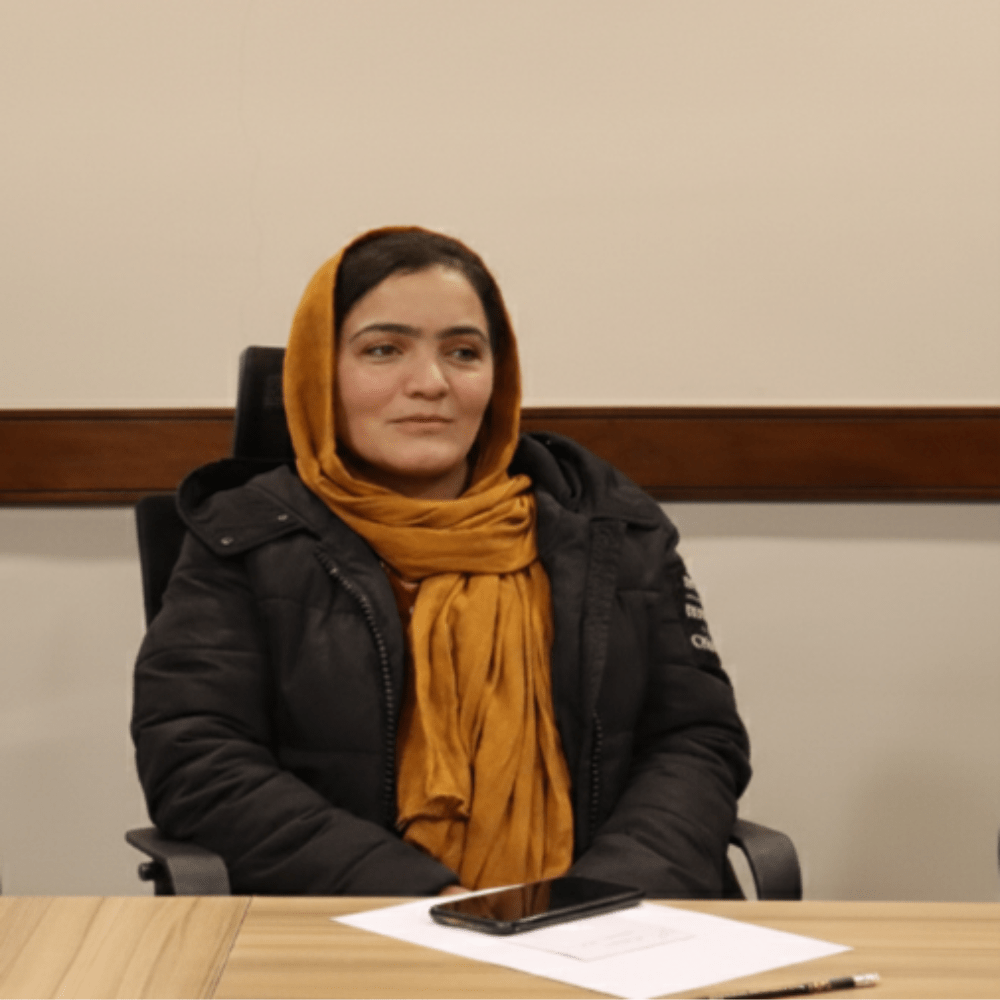
Miss Hajat serves as Team Lead for the SHEROs initiative for wildlife conservation in Pakistan with WWF-Pakistan since 2024. SHEROs integrates women's inclusion into conservation work for the first time in Pakistan through citizen science within Community Controlled Hunting Areas (CCHAs). She belongs to Khyber Village in Gojal and represents the Shahi Khyber Imamabad Development Organization (SKIDO), which is a community-based organization from Khyber. Her areas of focus include women's empowerment, community mobilization, livelihood development, and conservation.
Baithak
This session explores women as natural stewards and leaders, "friends of nature", whose intimate relationships with land, water, wildlife, and culture are essential to keeping ecosystems alive. Across mountains, rivers, forests, plains, and coasts, women act as the eyes and ears on the ground, protecting biodiversity through care, knowledge, and courage. From mountain landscapes where Wildlife Sheroes safeguard leopards, medicinal plants, and fragile ecosystems, the baithak examines how women-led conservation and monitoring emerge from lived connection rather than distant management. These women embody a mountain consciousness, observant and resilient, offering a distinctly feminine lens to conservation. The session journeys into stories and symbols, where a woman transforms into a dolphin to protect the river, echoing programmes such as sakhi, and reflecting the mystic bond between the feminine and water. The dolphin, often imagined as a female guardian, becomes a symbol of fluid intelligence, protection, and kinship with rivers. In agricultural plains, women steward the land from sowing to harvest, especially in cash-crop landscapes like cotton. They serve as vital connectors between nature, livelihoods, and sustainability, holding ecological knowledge that bridges soil health, water use, and community well-being. We also explore forests and mangroves, including sacred landscapes such as Karoonjhar, where the divine feminine is inseparable from nature, and regions that serve as strongholds for species like vultures. Across traditions and local folklore, women, species, and ecosystems intertwine, each reflecting and sustaining the other through story, ritual, and belief. Finally, the session would acknowledge the vulnerabilities of women, species, and ecosystems alike, highlighting how environmental degradation, climate change, and social inequities threaten these relationships, while also revealing women’s leadership as a powerful pathway toward resilience and regeneration.