
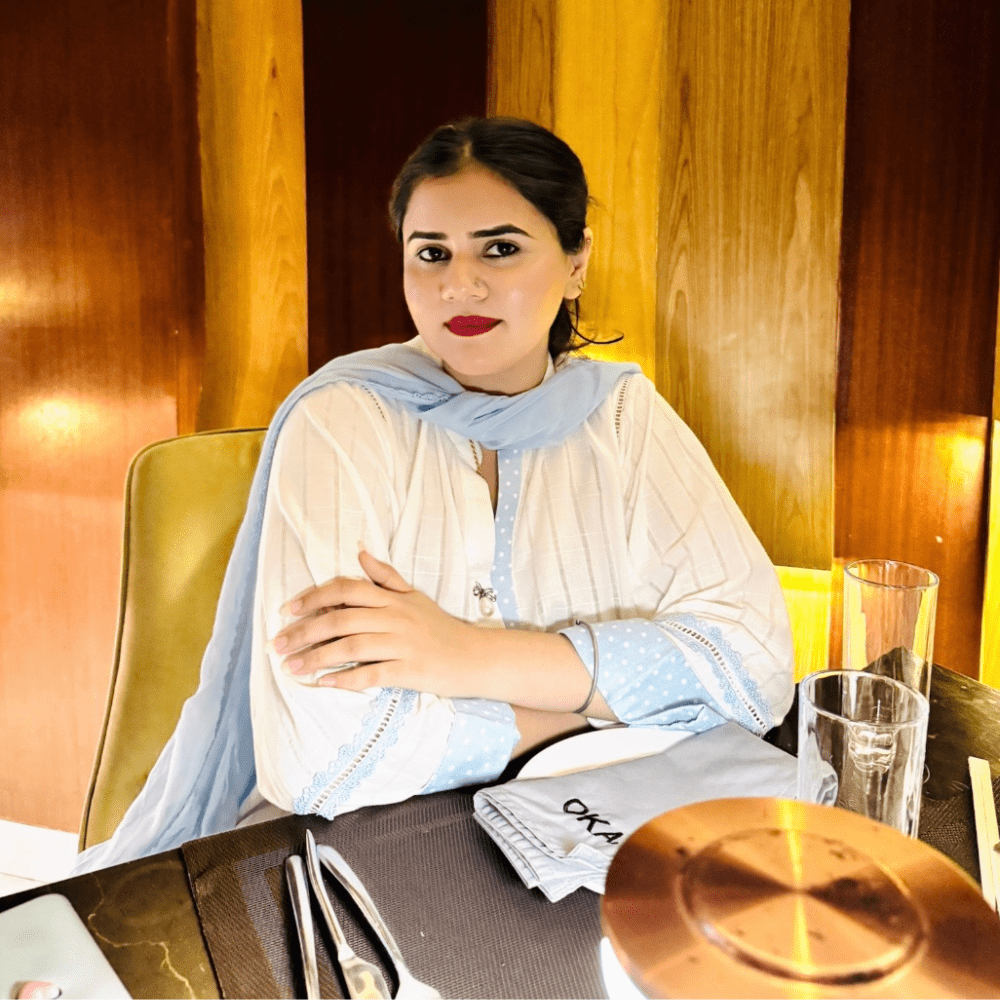
My name is Aima Abbas, and I am a third-year Textile Design student at Beaconhouse National University. I come from a Fine Arts background, with five to six years of experience in painting, which has strongly shaped my visual language. This foundation informs my approach to textiles, where I explore surface, texture, and material experimentation. I view textiles as a medium for storytelling rather than purely functional design. My practice combines painterly sensibilities with traditional and contemporary textile techniques, creating a dialogue between fine art and textile design. Through my work, I continue to explore new materials, concepts, and processes.
Interactive
Romantic Provocations is a roaming, shape-shifting exhibition that blurs the borders between art, science, politics, and public imagination. Part laboratory, part collective pause, it invites visitors into a living system where romance becomes method and friction becomes fuel. Across eight provocations, from algorithmic desire to intimacy by design, artists, scientists, and designers unsettle familiar narratives and open new ones. Multiple storylines unfold at once. Conversations remain porous. Ideas migrate across cities and disciplines, gathering new meaning as they travel and it all begins at WOW in Karachi. Visitors don’t simply observe; they participate in a slow, evolving negotiation of belief, desire, care, and disobedience. The result is a living archive of contradictions, gestures, and connections: a collective attempt to build worlds where love is disruptive, ambiguity is defended, and complexity is a shared inheritance
Interactive
Romantic Provocations is a roaming, shape-shifting exhibition that blurs the borders between art, science, politics, and public imagination. Part laboratory, part collective pause, it invites visitors into a living system where romance becomes method and friction becomes fuel. Across eight provocations, from algorithmic desire to intimacy by design, artists, scientists, and designers unsettle familiar narratives and open new ones. Multiple storylines unfold at once. Conversations remain porous. Ideas migrate across cities and disciplines, gathering new meaning as they travel and it all begins at WOW in Karachi. Visitors don’t simply observe; they participate in a slow, evolving negotiation of belief, desire, care, and disobedience. The result is a living archive of contradictions, gestures, and connections: a collective attempt to build worlds where love is disruptive, ambiguity is defended, and complexity is a shared inheritance